The Largest Social Media Content Idea Guide Online - 200 Engaging Ideas + Infographic

The guide presented here can be utilised by companies of any size, but it bears great significance for small businesses. Believe it or not, this really is the largest resource on the internet - I checked!
From today, you'll never worry about what content to post ever again.

Small Business Success and Social Media Content Go Hand-in-Hand
96% of small businesses say they use social media in their marketing strategy and 41% of local businesses depend on social media to drive revenue. Why?
unique opportunity to interact and engage customers - 54% of social browsers use social media just to search for products and services.
higher spending - customers report spending 20% – 40% more money on brands that have interacted with them on social media.
customer service opportunities - 71% of consumers who have had a positive experience with a brand on social media are likely to recommend the brand to their friends and family.
Because of the benefits above, and others, 61% of all small businesses allocate budget to social media marketing. When reading these statistics, it's crystal clear that social media marketing goes hand-in-hand with small business success. That is, if you own a small business, you need to be active on social media.

In 2020, this trend only becomes more prominent, and your competitors know this. Therefore, in order to stand out and establish yourself as a preference amongst your target audience in social media, above all, you need to be consistent and provide the content that actually initiates engagement.
Remember, content is king and the access road to your audience. Coming up with consistently engaging social media content, however, is not an easy task.
Creating High-Quality Content Consistently is Tough
I know this. I've been there. In fact, 65% of marketers themselves, and 60% of businesses (of any size) struggle with creating engaging and Google-loved content. However, this is especially important when you handle most of your content creation in-house as most small businesses do.
It can be a hard-fought battle, writer's block can be frustrating, and you're fully aware it's not long until you have to do it all over again.
This could result in you losing time that could be used elsewhere, spending too much time on thinking up content or missing capitalising on pinch point opportunities and moments because you couldn't get a post ready in-time.

Anyone can come up with content today. The difference between you and your competitors is creating, and posting content that:
is most relevant to your target audience
answers your customers' questions/addresses their pain points
is published consistently, at the right time, through the right channels, and in the right manner (based upon industry and customer research)
sparks interaction and conversation amongst people, and between you and customers
How to Create a Better Foundation For Your Social Media Content Strategy
To help with creating high quality, engaging, conversation-starting social media content for your small business, we've researched and tested countless post ideas to determine what types of posts reflect that criteria.
What research has resulted in is a guide containing 200 social media content ideas that you can use when you're struggling to post, or as a foundation to fill your social calendar for the year. I've also included an infographic for quick reference offline.
I've thought about all platforms when creating these ideas - Instagram, Facebook, Twitter, LinkedIn, or Pinterest, and video platforms such as TikTok.
To really get the most out of these ideas, make sure you’ve researched which platforms earn the most engagement from your target audience.
You also need to have a firm understanding of what your social media goals and objectives are so you can determine which platforms are most appropriate for achieving your objectives.
To set you apart from your competition, harness the little things like when the best time to post on each platform is, what the basic anatomy of good posts look like on each, optimal post lengths, and best practices for posting on social media.

These ideas aren't just filler content. Posting content based on these content suggestions will provide you with an opportunity to:
Build authority in your industry
Harbour trust amongst your customers
Initiate the conversation with, and engagement from, your fans
Establish consistency in your social media strategy
Foster relationships with followers
Some ideas may seem small, but they have all been chosen for a particular reason, and when used together, reinforces the opportunities above.

This is why I recommend scrolling through the rest of this guide to why each idea is a beneficial addition to your social content calendar cycle. Of course, you can get your infographic at the end.
Refer back to these ideas notes when you need to remind yourself of the reasoning of using a particular idea. Don't forget to use social media analytics to confirm what types of posts provide the most engagement. Then, post more of this content, and cut down on other content that isn't performing as well.
You should also personalise posts for your industry and audience, e.g., if you're in the fitness industry, use #workoutwednesday instead of #wednesdaywisdom Little adjustments like go a long way.
Lastly, don’t forget emojis in your headlines which are proven to help your click-through-rates. In fact, Facebook headlines with emojis generated 241% more clicks than those without one.

To deduce what content is going to work best for engaging your specific audience, and to truly get the most out the content ideas in this guide, I strongly suggest A/B testing.
Alongside A/B testing, you'll need to use social media analytics to confirm the content you've tested produces the desired engagement. Then, post more of this content, and cut down on other content that isn't performing as well.
Now I've given some information on foundations, pull up your blank spreadsheet or document, and let's get into the 200 ideas. To make the information easily navigable, I've grouped the post ideas into 6 categories listed below.
The content ideas aren't restricted to the group they're in, for example, an Expectation vs. Reality post could be used for Products & Services, and Industry & Education.
1. Company + Business
2. Life + Passion
3. Products & Services
4. Industry & Education
5. Customers, Fans, Followers
6. Miscellaneous
1. Company + Business

These types of posts are used to offer your followers a deeper level of insight into your company that your website doesn't or business listing can't.
Your goal should be to exemplify you’re not just a business people make purchases from, but a group of approachable people that have an organic passion for what they do.
By displaying the personality, culture, and history of your business and brand online i.e. showing what’s behind the product/service, you’re breeding familiarity with your audience.
Familiarity → comfort → trust → purchase
Company/Brand Values
A lot of these content suggestions focus on you and your team putting your branded personality on the front stage whilst showcasing your company culture. However, your audience won't understand get the message you were going for, the emotion you were trying to portray, or the value you wanted to reflect.
Integrating your company values into your social strategy can help you better leverage your brand personality on social media. Tell your audience exactly what the values are that hold up the actions of your business. Sharing your values online is like a commitment to them, and you'll find yourself better aligned with your consumers when you can show your values reflect their morals and ethics.

Patagonia states that they constantly work on “operating in a way that improves the planet and its societies" and environmental and social sustainability is one of their core values. Patagonia has a huge outdoor sports domain whose community values environmental awareness.
The post above aligns well with this value by using user-generated-content to raise awareness on climate crisis. Patagonia further exhibits their investment in improving the planet by giving access to the Patagnoia Action Works so people can join the fight. Don't just talk about it - be about it.
How Your Company Started
Every company or small business was born for a reason, sometimes through necessity, other times out of pure inspiration. Some of the origin stories of businesses are incredibly captivating, and your customers want to hear about them.
We all appreciate hearing the stories of committed single mothers that become multi-millionaire entrepreneurs, or about companies that started from building basements with no heat or air-conditioning and go to wearing the crowns in their industries.
80% of people want brands to tell stories so be one of the brands that do. When telling people how your business was born, be authentic - people prefer stories about regular people. The key to a story that pulls you in is being genuine.
Always bring these posts full circle, and show how the humble beginnings of your company translate into the success of its operation today.
Go Behind The Scenes
If you decide to go behind the scenes, show off the best attributes of your company culture - what it's like to work at your small business, what goes into making your products and how you create your services.
The informal nature of BTS content marries perfectly with social media’s sense of community by giving your audience a peek at what your company is really like. Doing this can create deep levels of engagement by making your audience feel a part of your process. Check out this example from Hootsuite below.

Go Live (with a script)
Don't just broadcast because it's what a lot of people are doing. And don't go live all the time. Go live to add value to your audience above entertaining your base. Planning will be your best friend in making this happen - rehearse, rehearse, rehearse.
If you don't plan and make it a mistake, it can be harmful to the image of your brand. The last thing you want is a potential customer to think you're unprepared. You also need to think about the setting your casting from - will it be your office? A public place? Your home? A good backdrop can boost engagement.
Lastly, test your connection and make sure you're fluent in whatever casting tool you're using. Way too often do streams lag, or do you fall into the 3-minute standby hearing "ok, can everyone hear me now?" Don't be one of them.
Share Press and PR Features
I'm not talking about features you've paid for - internet users are smarter than you may think. Try to build relationships with publishers in your niche, and other businesses that have large followings by doing things like guest blogging and featuring on the bigger Instagram accounts in your niche.
You're going to get rejections, but over time, as you build your own authority, these opportunities will arise if you keep trying. Guest blogging which validates authority, and backlinks at the same time. Check out platforms like HARO to get distribution. PR and Press features are good once you have them because you can recycle them and use them as reminders of your success.
Employee Takeover
Employee takeovers are seen as more accessible to viewers. Employee takeovers are an extension of employee posts where you can show off firsthand what it's like to work for your company from the employees perspective. It's hard to be Finnair's post below.

Why is this post so good?
written in 1st person informal
warm greeting
who they are, what they do
takeover schedule
encourages engagement by asking if there is something special followers want to know
reassurance: "don't hesitate to ask", "feel free"
personal: link to "personal account" + CTA "DM me'"
ends with CTA "Let's go!"
Such posts also a PR opportunity to display the personality of those that form your business - so choose the right people that reflect the brand image you're going for. Give your employees the freedom to express themselves, but don't do anything that may damage your reputation.
Share Your Other Social Profiles to Connect On
Having a strong presence and engagement across online platforms is great for SEO. Don't do this too often as it can look spammy to audiences. Before sharing other social profiles, make sure all your profiles are consistent - imagery tone, contact information and bios. Here's the top 21 social media sites to consider for your brand if you want to expand your reach.
Share Your Contact Information
This may sound silly, but it's necessary. Why? You want to remind others that you're always contactable, and more importantly, that you want to be contacted. As with sharing your other social profiles, don't do this too often. One way to consistently do so is to use your contact information as part of your CTA at the end of a post.
Feature Your Team
Why feature your team in posts? I've talked a few times already about making your business seem approachable, and by featuring your team in posts, you help to humanise your company.
This is important in the digital age, and especially important if most of your business or customer interaction happens online. If you're a brick and mortar store, it's just as powerful because it can draw your online audience into offline interaction. Show people whose behind that loved product or service.
Team-Workplace Post
Portray passion and enthusiasm when picturing your team within the workplace doing their jobs. You need your audience to know that the people creating the products and services they buy care about what you sell.
Celebrate a milestone

Do you have quarterly goals? Are there milestones you plan to hit? Celebrate these when you reach them - it's a proof you see your commitments through.
Quick tip - when you hit a milestone, create a discount or giveaway for your customers and make them feel a part of the success. Finally, thank your followers and customers for helping you hit your milestone. Hydro Flask checks all the boxes.
Support a Cause/Charity
First, don't be one of those companies that get involved with a charity for a social buzz - people are good at seeing through that. Instead, look at it from a perspective of self-actualisation.
Most businesses offer something that solves a problem. What charities are tied to that problem? For example, if you're a personal trainer, you may want to partner with a charity to offer free workout and diet programs - here, you're helping a cause, but through the facilitation of your business.
Be part of the charity, don't just throw money at it. This will maximise engagement for this kind of post.
Latest Company News
Keep followers in-the-loop with what is going on in your company. This is important because it shows your business is active. Don't forget to include a CTA where followers can subscribe to stay up-to-date and build your mailing list.
Profile Team Members
Though you’ll find most businesses on social media, you won’t often find the employees of those businesses with official social media profiles which I think is a real missed opportunity.
Similar to featuring your team, with profiles, you are focusing on the individual. You can use these types of posts when you don't want to do employee takeovers. One idea is to post biographies of your employees.
Story of Your Brand
The story of your business is different from the story of your brand. In this post, we're concerned with raising brand awareness. Think of this as the heart of your company. When discussing the story of your brand, hit emotional points with the audience - make them attached to the idea of your brand.
If you've branded properly, your brand should fit with the lifestyles and personalities of your target customer - remind them that your branding had them in mind, and encapsulate all the segments in the wheel below from PR Mention.

One of my favourite examples of brand storytelling is luxury good brand Shinola which you can read about in this post from Sprout Social. My current favourite is Google.
Share Your Achievement/Accolades/Certificates
Earlier I mentioned building authority, and how authority harbours trust amongst people and therefore makes them more inclined to purchase. If you hold any special certificates, accolades, or have partnerships, publicise those. A company that displays these is showing they have been tested and accredited as experts, or as being trustworthy.
Promote Your Website
Just like any promotion, don't do this too often. Definitely promote your website any time you make any changes, or add new content. When promoting your website through posts, create mini-campaigns.
Pick or create certain landing pages to promote (keeping these 15 tips in mind), rather than your whole website, target your post copy around that page, and then add custom URL tracking parameters to see how many people are coming to your pages from those specific links. Remember to have custom URLs for each social channel.
Cross-promote Another One of Your Social Profiles
Don't confuse this with cross-posting which is where you post the same content across social channels. This is lazy, and it can come off like that, as well as insincere to audiences - especially your loyal followers who follow all channels. When cross-promoting, you want to adapt basic content to fit each network and its audience.
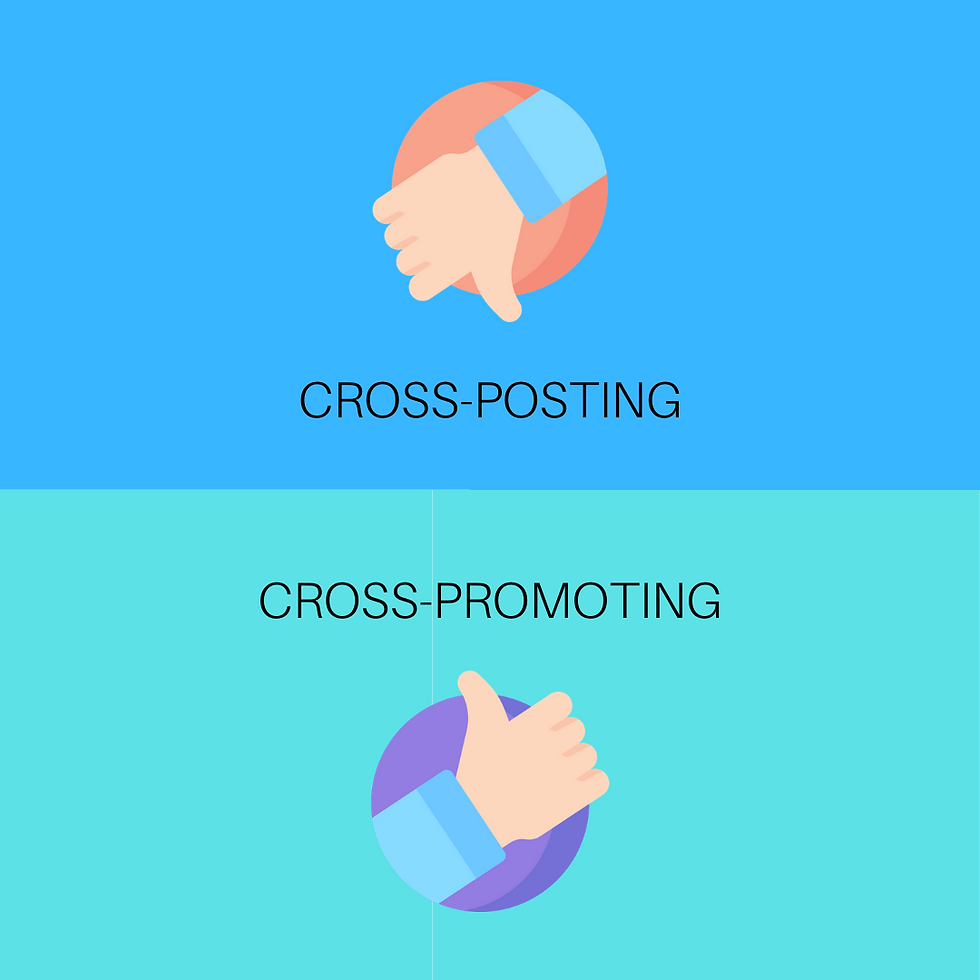
Remember, not every social channel has the same audience, and therefore each requires different messaging. For example, write a short twitter post, then compose a longer update for Facebook, and finally, create a photo for the post for Instagram. Try to use different, but consistent images over the exact same image.
Hiring Announcements & New Team Members
Always celebrate new hires. This is a double-win - new team members feel valued, and your followers see that your team is growing, meaning business must be good. Tag their personal profiles too.
Illustrate and Demonstrate Your Company Culture
Most businesses have a culture, even in its most simple sense. These posts aren't just limited to your team members. Demonstrate and illustrate the culture of your company at every opportunity to humanise your business, making it more approachable to your audience. If you want to see how culture can drive social media strategy, don't overlook the Hootsuite Instagram below.

People today don't like being bombarded with product offers on their feed. Posting about your culture also allows you to self-promote, without annoying people. Some other worthy mentions we'll see, and have seen in this guide already are Google, Mailchimp and Pantagonia.
Share a Win or Success
People love success stories, and people follow success, it's just a fact - why do jersey sales increase when college teams are winning one year? Always share your company wins and successes. And when you do, don't forget to thank your followers and customers for helping you.
Show Off Your Company History

Do you know why these posts work so well for small businesses? Something happens when we read of how others build their business empires from small beginnings in stuffy studio apartments, or how struggling single parents working several jobs turn into global entrepreneurial powerhouses.
Such posts are inspiring. It makes you think you can do it too. If you're a larger company, they're just as beneficial because you can show how far your company has come.
thyssenkrupp, is a multinational conglomerate with focus on industrial engineering and steel production, but as the post below shows, their success has incredibly humble beginnings., stretching back 200 years. Suddenly, they look like more than just a steel production company, don't they?
Share a Loss or Failure
Showing your company can face it failures is a big thing because it displays honesty and a commitment to success. Make sure if you're going to publish these types of posts, you've already overcome this obstacle before talking about it with your audience. More notably, show how failure has improved your company.
Story of Your Logo
If you have a logo, people who interact with your business are going to see it, so it's worth explaining where it came from. Most logos weren't random in the selection, and if a designer created your company logo, sit down with them, and create a story behind it. When people next see your logo, it will feel familiar because they know the story behind it.
Post About Company Events
If you or your company is speaking or making an appearance somewhere, it means that your knowledge and expertise signify value to others. It's another stamp of authority within your industry. These events also offer a chance to really drive home relationship building - especially in the digital age. Give followers more opportunity to see your business in action in-person. For people that can't make it, you can live stream it on your social platforms.

Make a Public Promise
People value commitment, but don't break your promises.
Collaborate With Another Businesses or Brand
Partnering with complementary (non-competitor) businesses can deepen the impact of your marketing activities. You need to do some good old bartering, and trade the value of your audience and your content to advance your social media goals.
Collaborations can eventually turn into partnerships if the rewards are fruitful for both parties, so choose the brands you work with carefully - and don't partner with a brand your audience wouldn't approve of. You'll see an example in Moz and Hubspot shortly below that shows collaboration can even work with competitors. If you're doing cross-promotion or content placement, don't take a NASCAR approach i.e. slap logos etc all over the place - be strategic.

Share Content from Other Brands
Here, I'm not talking about competitors, but other brands that align with, or complement your business. For example, if you provide a web design service, you may shoutout an SEO agency.It's not all about me, me, me. Posting content from others shows you engage with other businesses and could expand your reach if a mutual sharing develops between your businesses and the other.
Only post content from other businesses that complement yours and are relevant to your audience. This is more important than just sharing content from the biggest names in the industry - you're more likely to receive a reply if you do it our way. This can also be a way to start relationship building and collaborating with other brands.
Mention Competitors
There are certain situations where mentioning your competitors on social media can be beneficial to your brand. Competitors may actually help get a bigger piece of the pie. Take the example of Moz and Hubspot.
These companies are both inbound marketing companies that instead of sabotaging each other’s existence, teamed up to create an inbound marketing community.
Don’t forget - people shopping for a new product/service are generally aware of the options available to them i.e. your competitors. By posting about your competitors as well as yourself, you’re acknowledging the true landscape of your industry, which makes you seem more trustworthy.
You could also take the other approach like Wendy's does on their infamous Twitter with it's competitors...

2. Life + Passion

Life is about more than work, and we live in an age where a work-life balance is not only sought after but a common management approach of many businesses. With these types of posts, show people you're more than a company - you're not all work, no play, and you have interests. Have fun with these posts, but stay within reason.
Lifestyle Post
Whether you're at lunch, on the way to a meeting, taking a weekend hike to unwind, or on holiday, lifestyle posts offer a great break in your social calendar which will mostly be filled with authority-building content. Research the lifestyle of your loyal followers, and publicise that in content form.
Work-Life Balance Tip
At the start of this section I stated that people today strive for work-life balance. So, why not post some tips on how they can achieve this? This could also come under the business/company section, but I think it's more appropriate to post this with a more personal tone. Here, you have a chance to exemplify the balance through your company.
Motivational Mantra
We all have the codes we live by. We all have philosophies, ethics, and morals that guide our decisions. What are some of your personal mantras that motivate you in life? They don’t have to be deep, sometimes simple resonates more. One of my personal favourites is “You're mind is like a parachute, it only works when open.” Or, "If your ship doesn't come in, swim out to it."

Mental Health Awareness Post
The stigma attached to discussions of mental health is rapidly deteriorating.
Mental health awareness is gaining more and more traction in the media, and therefore visibility in the public eye. Some reputable organisations ask if mental health awareness may be a new marketing trend - I think it already is.

Share Gratitude
Spread the positive energy and attract it back. Tell people what you're thankful for.
Post About a Trip You've Taken
People love to travel, and Instagram has created a wave of social media-fuelled tourism among the Millennials. When considering lifestyle posts, these are one of the most engagement-fuelling posts you can incorporate into your strategy. Need some inspiration?
Check out 22 of the best Instagram travel accounts here, and get some tips made for people wanting to start a travel account (just use the principles).

Share Your Favourite Things
Similar to a lifestyle post, except now we are concerned with personal preferences, which forms a deeper connection with followers. Again, you should research the preferences of your followers, and publicise on instances of shared favourites.
Make a Recommendation
To make this easier, research what's trending on social media that resonates with your audience and their interests, and is on-brand, and make recommendations based around this. If any of your followers take up your recommendation and have a positive experience, that will strengthen your rapport with those people.
Post Something From Your Bucket List
If you want, you can make a mini-series out of these posts. As time goes on, people feel pressured to get things done. We all have a bucket list, or wish list, in some shape or form. Share some of the places you want to visit, things you want to experience, people you want to meet, food to try, anything. What's better? Follow-up with a post after you've ticked it off.
Reintroduce Yourself
You know what's good about this type of post? You can use it to show how you've progressing as a person. What have you learned since you last posted about yourself? What has changed in your life?
Remind People How You Got Started
Here, I'm not talking about how your company got started. I'm talking about you. Behind every small business or company is a person, a partnership, or a small collective. Tell people your own origin story, and bring it full circle as to how that led to your current venture. When we say remind, we say remind because sometimes people can forget that there are other people behind the success of businesses. Such posts reiterate your humanism.
Share a Day in the Life
A day in the life posts are about taking your fans on a journey. I recommend executing these posts through the story functions on social platforms, or Snapchat and TikTok.
Set aside a day to do this posting, and plan out what you will be doing. Remember to be real - if your daily routine doesn't involve getting driven in a town car to your office every day, or you don't take your employees to expensive lunches every day, don't do it. A day in the life posts should be authentic- show off the real you.
Share a Personal Story
Get personal with your audience. I've shared that people have a preference for stories. Personal stories have more resonance with others. Don't focus on your business with these posts, this is about you.
Share Some Personal Wins
You've already read that people love success stories. More than success stories of companies, people love the success stories of other people. Sharing personal wins shows you're not just committed to winning with your business, but committed to winning in life.
Share Some Personal Losses
Personal losses are something we all experience, more often than we like to think, but most of us are afraid to talk about it. However, people are always quick to push up others that are big enough to admit their personal losses. It reflects openness, and people will appreciate you, and therefore your company more, for it.
Share a Success Story
This doesn't necessarily have to be a success story from your business per se, it could be a success story from elsewhere that relates to your industry or niche, but it should always exemplify a benefit of your product or service. For example, if you provide fitness programs to your local community based upon a particular method, you could post success stories of people that have used that method.
The Time You Overcame an Obstacle
Facing challenges and leaping the hurdles is part of navigating life. Hearing about others that have overcome their obstacles is inspiring, and motivating. Separate your losses from the time you overcame obstacles so you can tap into different emotions.
Share Your Favourite Book
The books we read can say a lot about a person and can tell you about their personality. Some business owners or employees aren't comfortable with disclosing their whole personal lives on social media.
These posts allow you to tell people more about you by the books you gravitate towards, without you having to tell too much about yourself. Offer some key takeaways too. Provide some commentary such as a synopsis or your opinions. And ask a question at the end like in the example below to encourage your readers to comment.

Share the Book You're Currently Reading
Let people know what you're currently reading. Who knows - maybe one of your followers is too, and you can talk about it? Or, maybe one of your fans decides to purchase that book? Make it easy for them and provide a link to buy from.
Share Your Morning Routine
They say the key to a great day is a great start, and it's true. Morning routines are now becoming increasingly commonplace in people's lives with technological introductions such as Alexa, and routine setting on mobile phones and smart wearables that facilitate creating routines.

Show people how they should start their days right with a morning routine post. As above, ask others how they start their days and get the conversation going.
Share Helpful Habits & Routines
Studies indicate that habitual behaviours and patterns of practice are beneficial for health and happiness, and people today are becoming increasingly concerned about their mental well-being. Share tips that can aid others in creating better habits or provide routines that benefit the individual, as well as company employee health.
Offer a Life Hack
Offer general lifestyle tips to people. In the fast-paced society that we live in today, we all love things that make our lives easier and save us time - think about those two things when you're posting.
Share a Tweet You Like
Show people what you're interested in on Twitter. Be smart with this and try to identify similarities between yourself and your target audience. Everything you do on social media should be calculated, never random.
Share a Pinterest Pin You Like
Pinterest is increasingly popular, and is good for showing off your artistic side. Make sure your post is also informative to improve engagement rates.
Share a Youtube Video You Like
Mobile video consumption rises by 100% every year and by 2022, online videos will make up more than 82% of all consumer internet traffic — 15 times higher than it was in 2017, so it needs to be a prominent part of your social media post schedule. Post videos on tips, company Youtube videos or links to user accounts people should subscribe to.
Share a Short Video Clip
Social video generates 1200% more shares than text and image content combined, and people prefer short, bitesize clips, over lengthy presentations. Create a short video clip that offers a quick value to your followers, or share viral clips. It can be as short as 15 seconds. which is something Facebook recommends. Learn more about creating short, engaging clips for social media here.

Trending Pop Culture
Show that you're up to date and that you stay in touch with trending pop culture. See a trending hashtag on Twitter? Create a post around that hashtag. People don't want to see you just post about your business all the time, it gets boring, and boring followers leads to an unfollow. Posts on trending pop culture can also drive higher engagement - especially if you can relate it directly to your business.
Reshare Popular Content
Popular, momentary content won't always be in-line with pop culture, and it doesn't have to be viral. Look at what content is popular amongst your base, and reshare that. This will help establish more familiarity between you and your audience.
Share Viral Content
Commenting upon trending pop culture is different from sharing viral content. If you see viral content that you think your customers might be interested in, don't hesitate to share it. Such posts show that you're in-tune with what your followers like as people, and not customers.
National Day/Week/Month
Just like commenting on trending pop culture shows you're staying current, posting around dates shows your social awareness, and can provide an opportunity for you to tap into some markets you may not normally be able to.
Helpful tip - try to run promotions around these dates that relate to the holiday. Do you have customers abroad? Post for meaningful days in their countries too. Always look for days that share a relationship with your business to post on, and tie your products to those days.

Venngage is infographic creation software, that includes creation of charts.
On national donut day, they created a donut chart using a donut and associated their product with the occasion by highlighting their donut chart function. They utilised humour well, which when you do, encourages more engagement.

The Venngage post is creative. This post to the right is more sales oriented.
I've offered both to show the two ways you can approach such posts. The best will combine both - try that out when making your holiday posts.
Post Something Seasonal
Get seasonal. Get festive. Dress up your social posts with holiday-themed icons, graphics and colours (use brand colours whenever you can).
Don't worry about having to keep track of important dates and events throughout the year, Twitter provides you with hundreds of dates to add to your social media planner.

A Post from Your Local City
Show people where you're at on the map - this will give audiences a sense of where the products and services they purchase, actually come from. Are you an online store? No problem. You can create a personal social account, and use that to drive home this part of your social messaging. Tag your company so people in the area become aware that your brand is active in the vicinity.
A Glimpse into Family Time

I understand some people may not be comfortable with these kinds of posts, which is why we've provided other options such as posting about your favourite book - that way you can still provide followers with some personal insight into your life. If you're willing, family posts can make for some of the most engaging personal content when mixed appropriately with business content. It is a true reflection of work-life balance.
Post about Events Your Hosting or Going To
Similar to posting about events you or your company is speaking/making appearances at, but here, you are providing a platform for you to interact with your followers on a social level, not from a business-customer standpoint. It can help to provide incentives to your audience for attending events.

Post Videos from Events
Been to an event? Make your audience feel like they were there with you by posting a video about it.

Trending Music Playlists that Reflect Your Brand Personality
Everyone loves music. What's popular is shareable playlists. Use your brand personality and/or niche as a guideline for the music you share. For example, a local coffee shop could share coffee shop playlists (they exist, and some are great) and tell people to listen to it while they enjoy the coffee they purchased to make people feel they are at the coffee shop wherever they are.
Share a Podcast You Love or Own
This can help you find more familiar territory with your followers, whilst presenting your personality further. Sharing podcasts is good because people can tune into them on the go, meaning people can fully engage with your post while they're on the move.

If you have your own podcast, share your most popular episodes. Or, if you're interested in starting a series, click here.
Share Trending Funny Content
If we can all agree on one thing, it's that we all enjoy a good laugh. See what's trending in pop culture, and offer up a comical take.
Share a Joke or One-Liner
A little bit different to sharing funny trending content. Try to go with jokes phrased as questions e.g. knock knock, what do you call, what did x say to y. Give your audience some time to offer up their responses - sometimes this alone can become a beast of its own so watch out for obscenities. Or, just post the joke outright. I love the Chipotle tweet below because it shows you don't need to think about this too hard in order to be effective - a pinch of humour is all you need.

Make a Controversial Post
Don't mistake this for posting on something controversial - this could result in an immediate loss of followers. Instead, make a post that may stir some controversy amongst your followers by creating a ground for debate around a topic. For example, you could post something that could be true, or not, and ask your followers how they feel about.
Pets and Children

If you can find someone who doesn't smile when they see a cute baby or baby animal, tell them Digi Digs owes them a holiday (seriously). Such pictures are an easy way to brighten your followers day. Many companies today employ pets as office mascots and harness their likeability on social platforms like Instagram to boost engagement.
Share a Hobby or Pastime
Have hobbies or pastimes? Share them with your audience. A good hobby or pastime post would be a video of you engaging in the activity, or for your company, share a photo of your team members having fun together.
Relaxation Post
Your feet nestled in the sand with the waves gently washing on the shore. Cosied-up with the family during soft snow winters. These posts are good psychological tools you can incorporate into your strategy as they can work well when executed properly. A tip here is to try and post from a first-person perspective so you can put the viewer in your shoes and allow them to experience that feeling of relaxation.
Share a Famous Quote
Have you heard the saying that familiarity builds trust? Well, famous quotes are familiar with people. It may seem insignificant, but famous quotes build familiarity with your audience, and when used as part of your wider, coordinated posting schedule, make you more approachable.

Share Your Own Original Quote
The trick here is to not overthink anything. It doesn't have to be anything spectacular. You're not going for the next "Stay Calm and Carry On". What's more important here is to offer a short narrative as to why you made that quote. Give your followers some insight into the mentality of your brand.
Inspirational Quotes
Inspirational quotes have been around for years online, and they're not going anywhere. People love these kinds of posts - so why not jump on the bandwagon? Such types of quotes are held dear because they provide a jolt of optimism and make people feel good. Quick tip - follow inspirational quote groups on social media channels, or even create a separate account and tailor the news feed to those types of accounts. If you're struggling to use some of their older posts with your own original imagery and text.
3. Products & Services

If we're being honest all the song and dance is to ultimately sell your product or service to your target customer. Small businesses and larger companies don't invest in social media to have pretty-looking Instagram accounts, they do it to propel sales.
The posts below will help you effectively present your products/services through their
life-cycles, gaining engagement at all stages and creating top-of-the-mind awareness.
Continue reading to learn about the different types of content you can create, and the principles that lay behind effectively promoting your product/service on social media.
You'll notice from here on out I may use some Facebook ads, instead of standard social media posts, as examples. Don't worry if you're not running Facbook ads, I've dissected them in a manner that allows you to still take the principles of the best points, and apply them to regular posts.
Introduce Your Products & Services
There are many elements that go into a great product or service social media post:
1) being concise
2) creating an emotional connection
3) using persuasive language and power words
4) Focusing attention on benefits and problem-solving capabilities
5) Integration of SEO keywords
6) Adding an attention-grabbing fact or statistic
7) Addressing a pain point
8) Snippet of specific features or specifications your target customer needs to know about
9) Strong supportive video (or image)
10) directive call-to-action to promote further engagement
Keep the above in mind when you're posting about what you sell online.
Tip - does your post have the WOW factor? Does it pique interest or curiosity?

Highlight Best Features
What are the unique or notable features of your products or services? Put the spotlight on the core elements of what you're selling so customers better understand how the components of your product or service solve the problem you're trying to address for them.
It's not the most aesthetically-pleasing post, but this image from Lululemon is definitely an example to note.

The post above is for a new women's wetsuit. A few things make this a successful post - It's concisely written, uses positive imagery, shows the product in-action with a satisfied user, includes social proof (pro surfer approved), and a CTA at the end to shop the collection.
Share Your Process
If you're worried about giving up your 'secret sauce' just remember the below.
The truth is that a list of ingredients doesn’t make someone a chef.
While on the topic of secret sauces, learn why you shouldn't let it ruin your content marketing.
Illustrate Main Benefits
What benefits do your features come together to offer? What problems is your product/service solving? How are you improving people lives and them easier?

Compass stays direct, and sticks to the point.

On the other hand, Qwilr uses data, and visualisation to illustrate their benefits.
I've included both of these examples to illustrate the two different approaches you can take to exhibit the benefits of your product/service.
Share What Inspired You To Create Your Product/Service
Remember that people are attached more to brands that have stories behind them. The same goes for your products/services. People today like to know where the things they buy come from. What are the concepts and ideas that lie behind your offerings? If people understand what inspired you to create, they'll feel more inspired to purchase.

Lightly Promote Your Product/Service
The word lightly is used here because as indicated earlier, people online don't like self-promotion, they want you to solve their problems, give them what they want, and make their lives easier. So, when promoting your products and services over the course of the year, reiterate these elements in your posts.

Show Someone Using Your Product
Showing someone (preferably a current customer) using your product, or working with your service is a great testimonial for your business. Try to use user-generated content instead of in-house curated content, but make sure whatever imagery you're using is on-brand, and looks authentic. Avoid making these posts look like sponsored influencer posts.
Tip - capture your user in the moment of day-to-day situations and interactions, whilst using your service/product. Such shots have the ability to take an inanimate object, like a watch, and make it look exciting.
MVMT (watches) Instagram is an account you can't miss for this. They're creative with their captions too as shown below.

Illustrate Competitive Advantage
Why are Simba mattresses better than others? They're the most advanced in the world. Such a statement also pulls you to interact with the slideshow post below to discover how it's the most advanced.

When potential customers are considering new products or services, one of the biggest questions they ask themselves is why is your product or service better than your competitors. This isn't just a one-off post. Over the year, you'll want to remind your customers why they chose you, and continue to publicise your advantages to new audiences. Share specific features and benefits rather than whole products.
Compare + Contrast
Show your confidence in your product/service against your competitors. Create a side-by-side post of you and one of your competitors. Ideally, you should already have a better-perceived value - choose a competitor you know you can demonstrate you’re better than. The specific thing you need to remember here is you’re not explicitly stating your product/service is better. All the audience should see is you’re presenting a comparison of the two - they should feel they are deciding you’re the preferred option.
Myth vs. Fact - Product/Service Misconceptions
Is there any stigma attached to features of your product or service that can turn customers off? Pelacase is an example of a brand that faces this kind of situation head-on.

Dispel negative connotations associated with your product or service by doing some myth-busting. Acknowledge the myths people have created about your product or service and line up the truth right alongside it.
The pop words myth and fact are significant to me as they help strengthen the definite nature of your statement.
If you can dispel a myth about your product or service (doing the same for like-businesses at the same time), you exemplify thought leadership.
Strategically Promote the Launch of New Products/Features/Services
The reason for such posts is so you can gradually integrate new additions into your content schedule, nurturing familiarity as you progress towards your launch date. Don't lose momentum with this - make sure to provide updates at regular intervals. Keep a time frame, and create content around that so you can deliver on time. By the time it comes to launch, proper execution means some of your audience will already be familiar with your offering, ready to purchase, or will only require a few personalised interactions to convert.

Post a Sneak Peek of Something Coming Soon
Unlike in the post above, here you want to get behind the scenes and show your customers exactly what you're working on, whether its a shot of you working on your computer, writing up plans for a new project, filming an upcoming video. Such posts are useful for creating a sense of excitement about what's to come.
Post a Discount
77% of shoppers agree that discounts and promotions can influence where they shop.
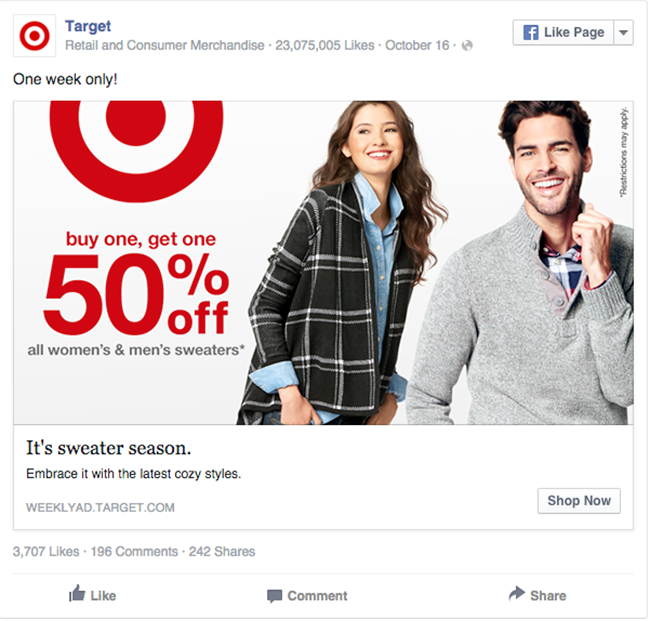
Having researched what exactly you're going to mark down for your offer, there are some key elements that make up a good discount post:
keeping your offer clear
using bold typography to attract attention
using scarcity and time limitations
focusing on target markets that are less motivated by discounts
Referral Promotions
When referred by a friend, people are 4x more likely to make a purchase - so why not try to put this tactic to use in your social media post by leveraging social media offers to encourage referrals. Offer rewards to your customers for referring new customers to your business.

Strengthen your messaging by using imagery depicting friendship like Serenity Spa has.
Social Coupon Campaign
The difference maker to me, and for most, is personalisation. When I see an offer, I want to feel like it was made for me - especially if you know you're being targeted by a brand.
Before posting a coupon for your customers, or posting to entice new buyers, you must therefore understand several key elements about your audience so should be aware of in order to make more personalised offers:
spending habits
online activity to time of biggest traffic to fit coupon timing
significant dates such as birthdays, anniversaries, etc.
You can then place customers in appropriate segments in your coupon system.

68% of customers say coupons generate customer loyalty and 66% of consumers think coupons helps in building brand awareness. People buy with their eyes so create a visually-appealing design and use a short expiration time frame with a tempting CTA.
I like VapoRub's post because it appears more native i.e. it looks more like a post you'd normally see in your feed, not an ad (see below). However, they haven't included a unique coupon code, and they've lost a lot of real estate but having a long-URL instead of using URL shortners.
Cookbook Village's post below looks more like an ad, but it's just as effective, because they've been direct in what the coupon get you. I would have made this stronger by illustrating one of their cookbooks so the viewer sees what they can buy.

When running a coupon campaign, make sure you have unique codes like the example above so you can effectively track and manage your coupon campaign (otherwise it can become a mess).
Another option is to ask people for their email to access the coupon codes so you can build your subscriber list. Tell them that by providing their email, they can receive more personalised offers in the future.
Host a Giveaway
There are tons of statistics behind the benefits of hosting giveaways and contests.
Hosting a giveaway is a great medium for your reach. One of the most common types of giveaways involves asking your customers to share a photo on social media to be entered into a giveaway draw.
Other's, such as Birchbox below, encourage deeper customer interaction, which is what I recommend. Doing this can tell you who your most active followers are, and infer new data on customers, in this case, product preferences. By running this giveaway, Birchbox will find out which of these products are most popular among their audience, telling them which to push in the future in their marketing campaigns.

Host a Contest
Did you know that contests have a conversion rate of almost 34%? 34% is actually higher than many other content types.
If you decide to host a contest, plan it in the following manner:
Set your goals and budget → choose your prizes and an exciting hook → choose social networks and contest entry structure → determine the length and frequency of your contest → read up on contest rules → promote and engage → convert, analyse, reflect.

Tip - add 'no purchase necessary to enter' as part of your offering.
Just like in the Birchbox example, use this as an opportunity to learn more about your audience and their preferences.
Host an Influencer Takeover
Using Influencers on social media to reach more people has skyrocketed in the last few years, and no one is about to stop using them just yet. If you're going to do an Instagram Takeover post, I suggest using micro-influencers. They're more affordable, get more engagement, and so have a better ROI than mega/macro-influencers.
They also appear more authentic to people. Research the Influencers of your industry - the person has to fit your brand image and ideally should be passionate about your industry or the products/services you sell. Find out what Influencers your fans already follow and engage with. Don't forget hashtag research.

Flash Sale
Don't do flash sales too often or you could suffer sales fatigue or end up with too many one-time buyers. When it comes to pricing, make sure your discount goes beyond your normal rate. Lastly, always follow up with good customer service and deliver your product or service in a flash, too.

Your time limit could be shorter depending upon the buying behaviours of your consumers and the right level of demand e.g. Groupon did a 4-hour flash sale and I have clients that do 30-minutes ones.
Understand the buying nature of your customers so you can determine the right cutoff point for the sale.
Have a Seasonal Sale
Host a sale based upon certain holidays, or festive seasons. You can check your supporting calendar that's provided in this post for useful dates. When running seasonal or holiday sales, incorporate that holiday or season into the naming of your sale for added effect.
You can check your the Twitter calendar I linked you to earlier in this guide for useful dates.

Above, Aardvark, an air duct cleaning company, has created a textbook example:
targeted towards very specific audience (homeowners that have houses with chimneys)
get is a very powerful action word
the text is short, original, creative, and seasonally-oriented
image reflects the season, and appropriate setting i.e. by the fireplace
headline has a direct offer statement (I would have called it the $95 Christmas Chimney Check Special)
link description uses the fear tactic effectively to illustrate problem
statistic provides social proof
ends with solution - Aardvark making sure your home is safe with their check
Unboxing Content
Unboxing content been a buzz for a while now, and a craze on Youtube.
There's no reason why they can't work for you on social platforms, too. Such videos are perfect if you sell products that come with multi-stage packaging.
If it's in the budget, invest in better packaging and creating unpacking experiences for your customers - I can't stress enough it's added value. Packing may be as important as the product itself in a day and age where we all order online.

Do you create packaging experiences for your customers as Kapten & Sons does? Reward your followers for sharing their unboxing moments, and remind others to share there's to get rewarded as well as they did.
Don't forget that user-generated content is totally authentic and authenticity is vital to potential customers when they're considering brands - 90% of consumers say authenticity is important when deciding which brands they like and support.
Remind People About Your Product/Service
New competitors are always entering the market space, so you need to maintain top-of-the-awareness amongst your audience. These posts are a type of remarketing and can allow you to re-engage parts of your audience that may have become inactive or even disengaged. Try to post these periodically through the year, and don't exhaust this type of self-promotion.
Screenshots
Seeing is believing. Screenshots can raise your trustworthiness and therefore credibility because screenshots are unfiltered. This reflects transparency. Use unedited screenshots of things like performance stats from your analytics, comments from followers, elements of your website you want to illustrate or emails from customers.

Screenshot posts are a handy option if you're in performance based industries, or sell products/services where customer satisfaction is based on quantifiable results.
Expectation vs. Reality
Sometimes products and services, and the experiences we have with those products and services, don’t always live up to the expectations of customers. This can lead to distrust being associated with your industry, product or service based upon false promises.
However, it can also be a great marketing opportunity. Illustrate what the expectation is so your audience recognises you acknowledge what their expectations are. Then, show the reality, so you can demonstrate you empathise with their pain point. You can then create a follow-up post showing how your product/service actually lives up to customer expectations.
Social Proof
Show the proof in the pudding - there isn't a better way to attest to your serviceability. Social proof is a psychological phenomenon where people assume the actions of others in an attempt to reflect correct behaviour for a given situation.
Essentially, it's the concept that people will follow the actions of the masses. It's the that since other people behave in a certain way, it must be the correct behaviour. It holds particular significance where the individual is uncertain about what action to take.
This is why we trust user reviews because they have experienced the product or service, unlike ourselves. Social proof however goes beyond reviews. It extends to overall serviceability meaning it encompasses anything that is measurable in your business. Look at the example below.

There's no customer review extract here, just solid figures. With 17,348 downloads in just 2 months - obviously others see value in this eBook. If you want more leads, which no business would say no to, you'll probably click if you see this. Think about this in the context of your business - what can you measure that can serve as authoritative social proof? Little things like the contrasting bright pink and yellow to highlight your attention-grabbers are worth noting as well.
Testimonials + Reviews
Reviews and testimonials are the strongest form of social proof, and this rings especially true for local businesses. Testimonials are produced by you, so you can pick and choose parts of reviews, or create things like video testimonials where you control what the review focuses on. That's why I prefer reviews which are typically handled through 3rd parties, like Google
72% of customers don't take action until they have read reviews, but 93% of local consumers use reviews to determine if a local business is good or bad. If you have reviews flaunt them - displaying reviews can increase conversion rates by 270%. This Instalinks post is a notable example because it encompasses the key elements of a good review post:

appears genuine
shows customer in image
action word: CREATE
benefit: additional revenue from website with smart ad units
social proof: 125 publishers already
CTA: try it on
concise: Increase Your Website Earnings
customer quote with measured benefit
4. Industry & Education

A lot has been said on the priority of building authority and trust amongst your audience through your social media posts.
Without a doubt, the best way you can do this is by informing and educating your target customers which demonstrate thought leadership.
Don't believe me? Well, did you know educational content makes consumers 131% more likely to buy? Educational content helps build trust, purchasing power, and brand affinity.
Below you'll find posts that offer you an array of content types you can post during the year so you can test to see which types work best based upon your audience engagement.
Case Study
You can make case studies part of sales funnels - a potential client sees themselves in the case study and signs up or contacts you (through your included CTA/link) to download the case study because they want the same or better results.
Case studies could be ones you've pulled from authoritative sources online (but do not try to pass off someones results off as your own) or better yet, one's that use your past customers/clients in their content.

Look at this Rankings.io post. Rankings io helps personal injury law firms rank highly on search engines like Google so this speaks perfectly to their audience.
What makes such posts effective that Rankings has done is the use of cliffhangers.
Cliffhangers are information gaps that people can’t help but explore. The recipe to an effective cliffhanger is simple: state a compelling fact or tell a story, but leave it unresolved.
You won't find out how Rankings got the law group 400% more cases until you download the study.
Internal case studies let people see your processes in action, see that your produces/services work in real-life scenarios, and most importantly, that customers are happy with the results you provide. Include direct figures where applicable.
Learn how to curate social media case studies here.
Industry Statistics
Rock-hard figures and data are hard to argue with and tough to disagree with. Try to choose recent statistics, and choose credible, well-known sources. Don't forget to always credit the original source.
I always stress to local small businesses I work with the value in ranking highly on SERPs because it’s increasingly becoming the way people find their local choices. One statistic I use to illustrate the importance is:
“There has been a 900% increase in searches that contain ‘near me’ in the last two years”
Why are you posting the statistic? It should be to validate the authority of what your pitching to clients or customers. Above, I know that getting local businesses ranking highly on Google will bring them more business, and I use this statistic to illustrate that people are in fact, more and more, are looking for local businesses online, so they need to think about SEO to capture this increasing demand. Another example is shown below.

When posting your stats like Constant Contact is above, use bold imagery and typography to emphasise the statistics, and highlight key figures and words.
In this case, they are using the statistic of the high ROIs email marketing produces to demonstrate that email marketing works - and you should therefore consider their email marketing software.
A Guide To
The best brands and businesses online educate their customer bases through the transfer of knowledge. Know your audience - think about a specific individual that represents your audience and what information they value, and then serve that information to them in easily-digestible chunks.

For example, Marketo is a software company that sell marketing automation software. Marketing automation is closely related to social media marketing so offering a guide on social media marketing would be of interest to their audience. What's so good about this post though?
offers 3 benefits from downloading: build awareness, drive revenue, and engage existing customers
wording is straight-to-the-point
posts a question - how?
contrasting colour CTA - DOWNLOAD GUIDE
simple, descriptive headline - 2016 definitive guide to social media marketing
power word - definitive
imagery: shows user enjoying using Marketo, as well as screenshots of the software
What Marketo also did is link to a guide on something that their service directly improves i.e. marketing automation makes social media performance better. Post guides on topics your business has authority in so you can help your readers implement what they learn in the guides, and answer their questions.
Never post something you're not knowledgeable in.
Share a Step-by-Step
One of my favourite forms of educational content are step-by-steps. This is because you can process them more easily than complete guides due to the way the message is being delivered, but still get across a good amount of informative narrative. Guides are more exploratory. Step-by-steps are instructional, but still make the reader feel like they are discovering the solution for themselves as they follow the steps.
When creating, or posting recommended a step-by-step, make each step easy to follow, you're not offering a guide - it should be something that's straightforward and not task to implement. Give your followers a way to learn more through a CTA.
Answer Industry FAQs

No matter what industry you're in, there are FAQs about the products and services that exist within that industry. If you can answer common questions about your industry better than your competitors you look more authoritative than they do. This is extremely important when trying to establish your small business in the market, or trying to become prevalent as a larger company. Remember the SEO acronyms
Current Industry Trends
How can you expect to succeed in your industry if you’re not aware of the way it presently behaves and the current state of play? Make sure your followers are always in the loop on the current trends of your industry so they know how to act, and react to changes in the industry, and so they can take advantage of the market where possible.

Future Industry Trends
We all love insider tips that allow us to benefit before the rest of the herd. Everyone loves to be part of that small group that did the cool thing before it was cool. Keep your followers ahead of their competition by telling them about future industry trends they can strategise for early.

Share Industry News
You're not always going to be posting your own, original content. Keeping up with this all year across your social media is no easy feat. Posting the latest industry news allows you to continue to display thought leadership without having to worry about doing the heavy lifting in writing the content and doing the data research.

Hootsuite offers social media management tools, so an article from Entrepreneur on laws of social media marketing is of value to its customer base.
In their post they their followers a question on the media content they're sharing.
I suggest doing this as well as including your own original commentary which should guide the reader to the most important facts and the core message of the news.
Offer original commentary, then pose a question.
Industry News Roundups
Industries evolve every year, some at highly rapid rates, with constant shifts, changes and releases in research. Even if you're doing a great job at keeping your audience up-to-date, the sheer amount of content that passes through someone's news feed, making it tougher for you to always be seen by your target audience.
Furthermore, regardless of whether are loyal followers, they probably won't be checking your profile all the time. Give yourself another chance to get your content seen by providing intermittent roundups.
Survey/Research Results
Have you surveyed your audience before, or have you quantified some market research you conducted or paid for? Let your base know what the results were if it strengthens the credibility of your product/service, or if it weakens the case for your competitors or arguments against what you sell.
Feel free to post the results of surveys or research from other businesses or organisations too, as long as they add to the case for your product/service and/or allow your audience to make better informed decisions.

Stack Over flow is a question and answer site for professional and enthusiast programmers. Knowing what the tools other developers are using, and how they work, can allow programmers to improve their work efficiency.
Industry History
I showed you can use the history of your company, and your brand earlier in this guide, but the history of your industry is another topic you can discuss too. If you're a local brewery, or bar, Heartland Brewery has the only first page-ranked blog post by a brewery for the search result 'history of beer' on Google. Such articles also show you don't need to make an exhaustive effort to be interesting, or to rank high on search results - just the right effort.
Historical Examples
Once in a while, industry disruptors create, or do something exceptional that changes the operational norms of that industry, like Tesla. What are some of the notable historic examples from your industry? And why were they so memorable and significant? What can you learn from their innovation or inspired creativity?
Industry Rules & Regulations
There are rules for operating in any industry. Help your followers stay compliant, and within the regulatory boundaries of your sector with these posts.
Correct Common Misconceptions about Your Industry
Misconceptions exist about your products and services, and they exist for your industry, too. The responsibility falls to those within their respective industries to make sure the audience is properly informed.

What are some misconceptions about your industry?
Solutions to Industry Problems
What are some common problems people face in your industry? There are common obstacles people run into when using products and services in all industries. Provide solutions and establish yourself as a problem-solver among your audience and they'll start to look to you when they want their questions answered.

Ahrefs shows how it should be done:
problem statement: SEO audits can take days
mood association: audits that take - days sounds boring
powerful adjective: simple - enforces the idea the solution is easy to follow
easily-digestible: solution is broken down into steps
benefits: reduce time to do audits + increase Google rankings
emotion: use of emojis creates an emotional attachment to the statements
Common Mistakes
This can be a highly engaging type of post but I rarely see it compared to other content online. Whether you're a small business or large company, mistakes cost money and customers, and that doesn't make anyone happy. Help your audience avoid those costly decisions. Wherever possible, tie the knowledge to your industry.

I like AdEspresso's post for the following reasons:
it states both a benefit and problem - Instagram's great for growing business, but it's tricky.
intrigue: saying the brands make the same mistakes is crucial - it makes these mistakes seem commonplace, and therefore something you should be aware of
the verb 'examine' implies the content is thorough
the adjective 'most' suggests the content is of particular value
emoji attachments
image states the title in bold typography, with contrasting bright colours
unique imagery that reinforces the core message of the post
cutoff ends with a solution that entices you to click 'See More'
Do's and Dont's
Show your audience things they should avoid doing and offer them the correct methodology right alongside it. Your audience won't have to go searching for their answer as you're presenting the solution, or information for them to follow-through on simultaneously. A good way to do this is to post in infographic form, as shown below from marketing agency Imagery Creative.

Tip - state the benefit of learning the do's and don't in your post that benefits your reader.
Share Secrets to
The effectiveness of a 'secret to' post is rooted in the phrasing. By using the word secret, you add a perceived element of exclusivity to your post i.e. not everyone is going to know about this. See how simple verbiage can have significant effect on perception in the post below.

What To Do If
What's that satisfaction you feel when things go to plan, or things feel like they're falling into place? It's a satisfaction that stems from feeling like the world is on your side. In business, there's not much that beats that rush, but in business, things won't always going to go to plan.
What are some things in your industry that can go wrong? Could something go wrong when using your product or service e.g. loss of some element of functionality? Create a safety net for your customers or followers for what to do when things don't go the way they're supposed to.
Business Hack
Just as you can post life hacks, you can post business hacks, too. When thinking of business hacks, I like to think of things that will improve productivity. An example can be seen below from Scoro.

This is a good post because it draws the audience in with a question - "Are you working hard or hardly working?", hooks them with data they're '89 hacks' and closes with a benefit - you'll beat procrastination for good. They've also got two CTA's: 'read now' and 'learn more'. I recommend following this pattern in your posts.
X Ways To
People like choice, and a 10 ways to (for exmaple) post offers that. When you offer people different options, you’re empowering the reader to make the end choice for themselves. When you offer different ways to do things, you make people feel less limited. If you can attach this to your product or service, use these posts to show the wide-use for your product/service.
Time-saving Tip

When I discussed life hacks, I said that people love to save time. So, offer up a tip that helps your audience save time. In this case, tie the time-saving tip to your industry. For example, a local restaurant may offer some hacks that save time when cooking and advertise it to single mothers interested in cooking recipes.
Money-saving Tip
The only thing people love saving more than time is money. If someone can save money from a tip you've provided, they will be thankful. One thing I like about this post from Business Insider is that it's simple. And that's the way business hacks, time-saving and money-saving tips should be - simple.

Remember, you're job is to facilitate an easier life for your audience. Another little thing to note is how Business Insider added authority by using tips from expert sources. In this video, financial planner Lauren Cole - you're more likely to take financial advice from a financial planner, right?
Subscriber Signup
Email newsletters are a great way for you to bring more traffic to your website, stay relevant to your audience, get personal to forge long-term relationships with customers and build authority by providing segmented, personalised content to your audience.
In short, newsletters help you build trust and create brand ambassadors. If you already have a big subscriber list, tell people that in your post. Give a look at previous content so new subscribers know what to expect.
Tip- create simple-form, unique-URL landing pages and use analytics to see how many people are actually coming to sign up from your post. Whenever you use landing pages - make sure the imagery on your post, and the landing page, is consistent.

This post encapsulates nearly all the elements of a great signup form for social media:
communication directly to target audience - "Are you a startup founder'
use of time: founders can be pressed for time, and they provide actionable advice to be read in under 5 minutes.
personalisation: "we've built a newsletter just for you"
imagery: typical working setup for many startup founders
simple URL
description states exactly what you get from signing up
The last thing to add would be some social proof. Here Krit wouldn't want to talk about how many subscribers they have because that would take away from the personal messaging i.e. this newsletter is just for you.
You could also choose imagery that shows previous posts, or create a slideshow posts for multiple images. Krit mentions they provide actionable advice - what are some examples? They could create an interactive post and show some features.
Original Blog Content
Does your business, or do you, have a blog? If you don't, to me you make it a part of your inbound marketing strategy this year - sites that blog generate 97% more visitors. Don't worry if you haven't blogged before, plenty of resources exist to get you off to a good start, and it's easier than you think.
Blogs are great because there is no better demonstration of authority and thought leadership than providing original long-form, educational information to your audience. It can also help you build up backlinks and improve search rankings if you can get people to point to your blog posts. What's even better is that 80% of the online consumers trust the information they get from blogs - take advantage of that.

Recommend a Blog
You don't need to do all the heavy lifting when it comes to content, that's one of the main points of this blog - you can make other brands and businesses content work for you. Connect your customers with blogs written about topics that echo your customers main interests and answer their main questions. Don't forget informed audiences feel more confident in the purchases they make.
Repurpose Blog Posts
This is probably one of the biggest time-savers on our list for content creation. It's all about creating less and promoting more. When you're looking to repurpose content, you want to find your most evergreen content - that which is timeless and high quality. Use your blog analytics to confirm.
Once you've decided on content, you can then translate this information into a different format e.g. an infographic, and repost. 54% of businesses say they struggle to repurpose content. The link is this paragraph will help you get started, and you can use the graphic below for reference on ways to repurpose content.

Repurpose Old Content
You can take the idea of repurposing blog and apply it to all your best performing content. The idea of repurposing isn’t to just re-post an old piece of content, you need to build on the value of the original, altering it to make it appeal to a new audience.
Re-share Evergreen Content
This is one reason I believe in, and preach tracking the performance of all your posts using analytics. If you do this, you can identify which of your social media posts perform best for your different accounts. Using this information, you have the option to re-post this previous content based upon its previous engagement performance. We're not saying copy and paste an old tweet, but if you know an audience is clicking on a post about a particular tip you gave, offer that tip again.
Share Your Favourite Resources
What are some of the resources you read, publications, or experts you follow? Where do you turn when you're looking for advice, or inspiration? What products or services do you use? For example, a local dentist may share the toothbrushes their employees use. The idea behind this is the resources you offer are recommend by specialists or experts (you), and therefore hold authority.
Best Free Tools (and/or paid)
We all love free stuff. Here's 11 top free social media management tools for 2020. Here are a couple of links to the top free social media tools for 2020: 11 tools, and 21 tools. Tip - see if any of the companies that provide the tools you're offering do referral programs. That way, you could earn some residual if the people you link tools to upgrade to paid plans.
Online Courses
Your audience is composed of different personas and some of your target audience is more committed to success than the rest. For those that are interested in self-education and growth, you can post links to online courses.
From previous customer research, you should already know what's too expensive for your audience, allowing you to recommend courses they can afford.
Quick point - don't recommend 3rd party courses you didn't create that may remove the need for businesses to use your services or purchase your products in the future. I like to suggest courses that complement my business.
Massive Links Roundup
Similar to industry news roundups, except here you are going to focus on providing a huge links database on one specific, relevant topic for your audience. Such content is highly shareable - it’s extensive and informative and visually-digestible.
Glossaries
Jargon exists in every industry, and sometimes your audience is going to run into terms that they don't understand. For example, talk a lot about content marketing in this guide, so a glossary of content marketing terms might be useful for some readers.

memoQ offers flexible translation and localisation management solutions - translation industry jargon allows users to understand memoQ better, It can also help those new to the industry to assimilate to the environment.
Interview an Expert
Bring education to life by interviewing an expert. Remember that people value the opinions of others with experience, people who’ve been through it, not others who just talk-the-talk. If you can plan well, you may want to consider offering these as live streams to make your audience feel more like they’re in the room. Study up on your expert, and choose open-ended questions so you can provide a free platform for the expert to talk. Post excerpts to the full interview such as clips, some short questions and answers, or audio trims.
Host a Q&A Session
This is different from hosting an #AMA. With a Q&A, you have control over the direction the conversation takes. Before hosting a Q&A session, do your research. Pick questions based on trending topics. Pick questions where you can demonstrate the strength of your company or brand through the answer. When you give your responses, be full - give your audience added value they can walk away with.
Post a TED Talk
A big part of what makes TED so appealing is the audience. People who give TED talks give them to their direct audience, their community, the people they share these big ideas with. When you're watching a TED talk, you're made to feel your amongst an audience of like-minded people. Find talks that discuss your industry and its main talking points and trends that speak to your audience.
Explainer Video
Short and sweet. Keep your explainer videos short - 90 seconds or less is ideal. You should always state your key message and value proposition in the first 30 seconds. Speak in 2nd person (you, your), and use simple language - i.e. don’t alienate your viewers with technical terms they can’t understand. Incorporate some music to set the tone. Remember, visuals are secondary - they should reinforce your voiceover, but it’s not a Hollywood production. Your explainer video is all about the script.
Connect People to a Helpful Online Group/Community
Many exclusive forums exist that often provide highly useful information from well-experienced individuals within particular industries. One place to look is Facebook. Search for groups based upon industry keywords and filter those that are education-based, or that would be entertaining to your audience. Look at private groups for that official stamp of exclusivity. Open-source communities are just as important to look out for, if not more, due to their low barriers to entry and higher volumes of content. However, I find exclusive groups generate higher-quality information.
Create a Series around a Relevant Topic
Fill multiple spots in your social calendar by creating a social media web series. Give your series a unique name, and a unique hashtag. Have your episodes already written prior to the release of the first - that way you can focus more on promoting your series.
Once your series is released, your priority needs to connecting and interacting with your audience one-to-one as much as possible around the topic to stimulate discussion and continued interest. If you blog, you could repurpose your best articles into mini series for social media.

Because of their bitesized nature, mini series are perfect for sharing. Fully Charged Show, the world's #1 Youtube channel on clean energy and electric vehicles, does a good job of reiterating this in their post above.
What could be better? I'd include a short sentence that describes what the mini series is about (as it's the first episode). Furthermore, I would have included a CTA at the end like "Click now to watch!"
Share a Plan Based Upon Customer Needs
Planning is paramount to the efficient, and successful operations of any business. Help your followers and customers plan for ahead to plan for success.
Share an Organiser
Share organisers with your followers to help them maintain structure in their planning. Organisers will help your audience improve productivity.
Post a Template
Templates are time-saving gems. Many for your industry will be available, so try creating your own versions and blend your brand seamlessly into the template. Here's 9 social media templates to save you even more time and effort.
Plans, organisers, and templates are everywhere. Make your posts standout by stressing the added value they offer the reader. I count 6 in the post below from Infusionsoft. You can do this by using multiple benefit statement - I count 6 in the post below from Infusionsoft.

Post Printables
We live in a rapidly-evolving online age, where our lives become more digitised by the day. But some people users like printables. The best types are things like planners, organisers, calendars - material that people can print off, and interact with offline. Pinterest is a great platform for posting, and finding this type of content.
Free Download
People can't always engage with your content in the moment. Giving your users a free download offers freedom and flexibility. They can download the content linked, and view it on-demand, offline, as they wish.
Free Trials
Many of us are cautious about investing money in anything new. Find free product and service trials (preferably ones that don't require any credit card details) for your audience so they can gauge their satisfaction before committing to a purchase.
Post an eBook
Some of your audience desires fuller content. Another type of educational resource you can recommend are eBooks to your audience. When suggesting eBooks, try to avoid linking to those that require you to enter personal details in order to gain access or sources that have too many popups. Such sources are off-putting and distract the reader - even if it's not your own original content, it's your recommendation.
Share a Slideshare Presentation
Slideshare is often referred to as the sleeping giant of content marketing. Learn more with this marketer's guide to Slideshare.
Share a Chart
People love visual information - in fact, it allows people to process information 7 times faster. Share a chart with your audience that illustrates an eye-popping statistic.
Share an Infographic
Did you know 90% of information sent to the brain is visual and 65% of people are visual learners? This helps explain why infographics are liked and shared on social media 3x more than other any other type of content. Not only that, infographics can increase web traffic by up to 12%. Heaps of data exists on why infographics need to be part of your content strategy.
If you're creating your own infographic, keep it simple and focused, confirm your facts and figures, make sure your narrative flows, as well as your design, and, have a catchy headline. Hubspot has a good guide on not only creating infographics, but doing so in under an hour. They also have one of the biggest infographics I've seen online.
Below, you can see a simple infographic outlining 5 steps to creating infographics.

Provide a Checklist
This is another type of content that helps your audience plan. Checklists are useful for making sure you haven't missed anything. A good checklist is precise, efficient, and easy to use even in the most difficult situations - keep that in mind when creating yours. It should provide reminders of the most important steps only, and above all, it should be practical.
Share a Cheatsheet
Try taking some of your longer content, and condensing it onto cheatsheets to create easily-digestible bits of information. Cheatsheets supply your audience with only the most necessary pieces of information needed for successful completion of a specific task, or goal.
Post a Quiz

Offer the means for your audience to clarify their comprehension for themselves. Tie your quiz to your product or service like the Aweber email marketing software team did in their post above.
Quizzes open up opportunities for follow-up interactions, and opportunities to display expertise - see who interacted with your post or took your quiz and follow-up. People who take quizzes are committed to success or improvement - these are the people you want to work with, and the people you want as your customers.
5. Customers, Fans, Followers

At the end of the day, it’s all about your customers, all about your followers and fans. Without them, your doors wouldn’t stay open.
The posts below equal an opening to exhibit customer service. are oriented to your audience, and are designed to get them fully-interacting with your post content.
Use these posts to create points of one-on-one interaction with your audience, build relationships, and improve customer satisfaction & loyalty.
Thank Your Fans
Everyone likes to feel appreciated. Thank your fans for following you and investing in your brand. Let them know you appreciate everything you accomplished with their help.
When saying thank you, show authentic affection by stating why your thankful for your followers. You can do things to humanise your gratitude with positive selfies of your team in order to help you achieve higher genuineness. You don't need to give anything away, that's not what this post is about so don't distract yourself from the message. Just say thanks. And mean it.
I like the example below from BMW because it incorporates their product directly into the messaging. See if you can do something something similar. For example, a local foodie could make a thank you message using food items.

Shoutout your Clients and Customers
Shouting out your clients is a method of indirect self-promotion and long-term relationship building. When you post a shoutout to a client, don't put your attention on the results you've generated for them. In fact, don't even mention that - in this regard only mention that they are a client, and you thoroughly enjoyed working with them.
Your focal point in these posts should be your clients business. Give them a shoutout based around their accomplishments. Such posts help keep your client aware of you and help solidify your relationship. They also show your audience your working with flourishing brands that do well - don't forget people love to associate with success.
Customer / Fan / Follower of the Month
Customer/followers of the month are an easy way to add some more personalisation to your social strategy. Create rewarded criteria that force followers to engage more with your brand in order to become the top customer/follower for the month. For example, if you offer a dog walking service, you could reward the pet that walked the most that month with a free nail trim at their local vet.
Follower-Only Offer/Sale
Fans love exclusivity because it makes them feel special whilst showing that you're appreciative for their following. Use a limited selection of products or services, and combine that with reduced stock availability. Highlight the exclusivity like Larsson and Jennings did with words like 'private'.

Gift Your Audience
No questions asked, no information required beyond an email if it's necessary for customers to claim - all this is is an appreciation of your followers designed to build brand loyalty. Don't overthink it. Lastly, be prompt in your delivery.
Mention Your Followers
Include your followers in your social media messaging and pull them directly into a conversation. Did a follower recently mention you, something about your brand, your products, or services in a post? Give a mention back, and acknowledge your audience.
Tag a Friend or Bestie
When you research your audience, research their audience too. What are their most engaged followers interested in? Start simple - which friends are people tagging in their posts? Who are they commonly in pictures with? A popular thing to do is to ask people to tag their best friends. Check out the original post from Athleta under the winners announcement in the post below.

What makes it standout to me is Athleta asks their followers to tell them what their BFF means to them. This will allow them to gather further information that they can use to create, for example, more personalised email campaigns in the future.
If B2B you'll think about this a bit differently - who are people that run the businesses you work with? You could also rename this post 'tag an employee'. This kind of post requires more extensive research but if you target the right segments of your audience with this post, you can increase your reach beyond your immediate sphere of influence.
Interview a Customer
When interviewing a customer, always remember it’s about them, and not you. One of the biggest tips I can give is to get into the personality of your customer - show off how this person is your target customer i.e. the audience you’re trying to reach.
What I mean is use this time to really dig deep into what your custom is like as a person in the setting of your product or service, and gain valuable information to better tailor experiences in the future.
Bridge their personal life to the problem your product or solution solves without mentioning the product/service outright - this isn’t a testimonial. By interviewing a customer, you can really make them feel involved in your brand, and show your audience you value their opinions.
Host a One-on-One with Fans

One-on-one interactions are the most personal and Twitter can be a good platform for getting a one-on-one conversation going with your customers. One-to-one chats let you educate your customers and build rapport with your followers at the same time.
Host an #AMA (Ask Me Anything)
What's different about this to a chat with fans? It's the shift in dynamic of the conversation. An ask me anything seems more accessible to people than hosting a one-on-one chat, and it puts the audience in control.
Hosting an #AMA offers an opportunity for your followers and fans to not just get answers to questions, but to learn more about your brand. When posting, provide a directional benefit e.g. an opportunity to get your small business marketing questions answered, and learn more about us - this directs your consumers towards what types of questions to ask, and reinforces the benefit. What's different about this, is by
Ask Open-Ended, Customer-Oriented Industry Questions
I know that's a mouthful, so let's bring it down quickly. Asking questions is easy, but what generates engagement is asking those questions that are specific to your industry, thought of from the perspective of your audience interest, and open-ended, You can see the impact of combing these elements in the post below.

industry-specific: Kitchn is a daily food magazine on the web that celebrates 'kitchen intelligence' - this post helps educate (through open convo) what to order at bars you don't trust
customer-oriented: what do you order + audience interest: drink recipes
open-ended: the question posed in this post encourages conversation
CTA& follow-up content: 'comment below' + opinion of 12 food writers - this is appealing because the writers have authority so might make good recommendations
Respond to Customers & Their Questions
Responding to customers is a daily part of business operations, but sound customer service does a lot for your online reputation and boosts customer retention. Investing in new customers is between 5 and 25 times more expensive than retaining existing ones - so focus on keeping the customers you have right now happy by answering all their questions. This will minimise product/service uncertainty levels and drive satisfaction.
There is a lot to suggest customer service is a core component of online business success. For example, 93% of customers are likely to make repeat purchases with companies who offer excellent customer service. That means customer service also helps you turn one-time buyers into repeat customers.
You should therefore jump at any chance to respond to your customers queries. Create a post where you answer a specific question that a customer recently asked (as well as replying directly to their query) - recent questions, they're currently relevant to your audience - so address their concerns. Nike has some of the best customer service on their Twitter support account.

prompt response
starts with basic solutions
does not make assumptions
reminds customer future support will be readily available
Once you've answered a customer question, you could follow up with a request for a review. Your customer satisfaction levels will be at their highest after resolving customer queries.
Respond to Negative Feedback
Resolving queries is one thing, such as difficulties using your products or services, but a negatively-framed formed opinion about your business (normally in the form of a bad review) is another matter.
This is because the experience you provided was so bad in the eyes of the customer they did not even seek resolution and went straight to forming a bad view of your business. For that reason, response to negative feedback is more important than answering to customer queries.
But forget the impersonal nature of online reviews - if you can handle negative feedback, the positive impact upon your online reputation will be greater than from handling daily-to-day questions. Honda handles this scathing review below with class.

does not react to the negativity with further emotion
maintains a neutral, and sincere tone
apologetic
displays a desire to find a solution: "we'd like to learn more", "we look forward to speaking"
accommodates the reviewer "If you wouldn't mind"
Post a Challenge or Ask To Pledge
Some of us like a good challenge. Creating challenges can result in a sense of accomplishment to those that engage. Challenges are suitable if you can create challenges that involve the use of your product/service. This way, they associate their achievement with your product/service.
For example, a nutritionist that focuses on weight loss may post a challenge to lose x amount of weight in a limited, but achievable time frame, using the nutritionists' dietary plans. Make sure your audience can beat your challenges so they can experience that sense of fulfilment.

Ask True or False Questions
Sounds simple, but here, you can use certain tactics to your advantage. One thing I like to do is use misconceptions or eye-catching facts. For example, I may say:
"Less than 12% of small businesses track data or look at analytics" - True or False?
Now, this is actually true, but I chose it because it 1) grabs attention, and 2) can be turned into a conversation. With that being said, know what the answer is to the question your posing - you don't want to get fact-checked by your followers. Remember, you're meant to be the source of authoritative knowledge, not the audience.
Ask Multiple-Choice Questions
Multiple-choice questions are great because of the amount of usable feedback you can gain from asking them that can direct future customer interactions. I strongly suggest using multiple-choice questions to gain feedback on your business.
Host a Survey Poll
Similar to asking multiple-choice questions, you can also host a poll. Polls are better for pulling big-data from your audience.I recommend survey polls and making sure your options are distinct from each other so audiences can make their choices more easily. If you can, add scarcity e.g. put a time limit on your poll. Also, add hashtags so your polls reach a greater base. You can also create surveys with SurveyMonkey which will integrate with social platforms.
Ask for Input on Business Decisions
Today, customers love to be involved with the brands they follow, and the businesses they purchase from - particularly if that involvement has an impact on the product or service they use. I like getting customers involved in recommendations for upcoming products or new services because it is a recommendation where customers will experience a tangible effect.

Ask Followers for Content Suggestions
Involve customers in your content creation process. This way, your audience feels more a part of your creative strategy, and, you'll also deduce what type of content your followers are actually demanding, eliminating guesswork, and making research easier.
Ask for Recommendations and Opinions
You can ask for recommendations, or opinions on just about anything - books, TV shows, apps, music etc. Just remember to always stay current with pop culture. I'd publish this type of post to gather recommendations and opinions that inform your business strategies.
This or That
Asking this or that questions can help you deduce customer and audience preferences. When done correctly, this or that questions can, therefore, be a good platform to A/B test. If you're going to create a this or that post, it's definitely helpful to get visual - show pictures of each option (or text if images aren't appropriate) next to each other.
What's Your Favourite
This can help determine the preferences of your followers. For example, a local butcher may ask what followers favourite dishes are to make with their purchases, and offer these up at a pop-up cookout.
Ask for Feedback
Some small businesses may not engage in this because of the possible negative backlash, but that is something you should actually welcome. Negative feedback is an opportunity - it provides you with a chance to exhibit your awesome customer service by showing you can handle negative customer experiences (don't forget to publicise the resolution). When asking for feedback, don't bait i.e. don't offer rewards for feedback, you want feedback to be genuine. Above all, keep your request simple.
Ask Your Audience How They Found You
By finding out how your customers found you, you can not only determine what acquisition channels are working best so you can focus on marketing those areas more. Furthermore, you can also establish further, who your active base is. Customers who care enough to take this time are loyal ones. Celebrate them and thank them for their feedback.
6. Miscellaneous
The types of posts below don't fall into any specific category but don't ignore them.
These posts create engagement because of their uniqueness. Because they're unique, they stand out.
They're also easy to implement, so you can use them when you're stuck for time.

Bite-sized Educational-Interactive Posts (Key for 2020 Content Marketing)
The popularity of interactive content in social media strategy in rising rapidly, for example, long-form infographics keep you scrolling, but engage you as you interact through relevant, useful information.
What's gaining even more traction, however, is bite-sized educational content that you can interact with. A great platform for this kind of post is Instagram. Create a carousel post around a topic your audience cares about (or your product/service) and offer short, direct, scroll-stopping sentences using imagery that emphasis your message for each slide.
Don't forget about your caption - here, you can build on the information you've offered in the post for those that want further information, and provide some external linking.

Long-Form
Bite-sized content drives 2020, but that doesn't mean you should overlook long-form posts - quality is more important than quantity when it comes to content creation.

The foundation for great long-form posts is built on one thing - amazing copywriting.
Look how well-written this long post from Oatly is written.
Personalised Content for Followers
Remember with personalised content, you need to personalise the whole of your customer journey. For example, if you engage an audience member through personalised content on social media, don’t follow-up with a generic email or direct them to a template landing page - personalise all the way through the journey (it’s all about being consistent). Keep these
7 principles in mind when creating personalised content - seamlessness, contextual relevance, behavioural-based personas, real-time messaging, dynamic content, thinking 'how' not just 'what', and being invisible.
In Case You Missed It
Your followers aren't always going to see your posts in their news feed, so unless they're making the choice to visit your profile every day, chances are they've missed something, at some point. Create these kinds of posts to try to put the content you want to push to your audience in front of them again.

Follow-Up Posts
Keep the conversation, and earn some more engagement on previous posts by following up on previously posted content that had high levels of interaction.
Like If, Share If, Comment If
Use a straightforward CTA with your customers. Here, you need to pick something that is agreeable (resonates with your audience), shareable (easily-digestible), and interactive (conversation-sparking).
Caption This Post
Fun is the key here - try to use comical pictures, but keep it clean. You can always hide inappropriate comments through account settings.
Memes
Did you know that according to some reports, brands see a much higher ROI from working with meme accounts than traditional influencers? Have you ever thought about creating memes around your product or service? Look below for a couple of brand examples to get the creative juices flowing.


GIFs
Just like memes, GIFs are popular too.
Believe it or not, there are actually guides to using GIFs and memes in your marketing strategy. I won't get into it here - but it has been said that it is the new influencer marketing.
Get Handsy

Use the sense of touch.
Show pictures of you holding objects - preferably ones that relate to your brand, or your own products and services. Just remember to always use a plain background.
Action Shots
Stimulate your audience's imagination with action shots. Action shots capture the moment in time and can pull your reader into your post. See if you can get an action shot of a follower using your product or service.

Flat Lay
Creating flat lay images simply involves arranging items on a flat surface and taking a photo from directly above them. Flat lay is huge on Instagram - just Google it. The great thing about flat lay is that it can be used in any industry, and with any product.

The Xbox campaign above was to market their personalised controllers. The campaign showed various custom designs for different lifestyles and passions. Some examples from the campaign were motorcycle riders, fitness enthusiastic, painters and graphic designers.
Friendly Selfie
I emphasise friendly here because it means you can use this type of selfie in any setting. Again, these are big on Instagram, but the true strength lies in its applicability to any situation. Positive emotion goes a long way. For example, you could post a picture of coworkers in the corridor with positive expressions as they have a convo, and ask a question in the caption of the photo to start a conversation.
Before and After
In life, we all appreciate a positive transformation. The transformation can be personal, or relate to your business. For example, before and after pictures of a clients website redesign, or before after pictures of your weight loss/weight gain transformation.

Dapulse decided to post a visual representation of life as a project manager before using their software, and after. I like how they've used colour association to their advantage to give the feeling that life is brighter when using Dapulse.
Post a Fill in the Blank
This is an easy way to get your audience engaged and a quick option when you're struggling for a post. Some people are like deer in headlights when they see these posts and can feel compelled to respond. Remember to keep leisurely posts like these to a minimum, you don't want to hurt your brand equity. But, if you're followers are engaging with you - go for it.

____ of the Day
Ending on a light note, post something of the day. As we all know, GoPro manufactures action cameras and develops its own mobile apps and video-editing software. So, photo of the day works perfectly for their base. Their Instagram account is one of my favourites to follow.


Hashtags
Click here to see what research has shown to be the top hashtags for likes in 2020, as well as a hashtag for each day of the week. You should customise these hashtags to fit your industry and audience. For example, if you’re a personal trainer, you may use #SaturdaySweat.
I also recommend learning how to properly utilise hashtags this year and conducting hashtag research. Posts with at least one Instagram hashtag averages 12.6% more engagement - a little hashtag research can really crank up your content marketing. Start by examining root or core keywords from your SEO strategy and generate some hashtag ideas, organising them into a spreadsheet.
#tbt (Throw Back Thursday)
#saturdaymorning (or night)
Conclusion - Now What?
If you made it all the way to the end congratulations, I know that was a lot so thanks for reading!
This guide helps you fill your social calendar with productive content that encourages customer engagement.
However, to get the most out of these ideas, you need to have a clear social media strategy in place.
That means understanding the persona you are delivering your message(s) to, knowing exactly what your goals are, confirming what your message is, identifying what metrics you need to measure, and knowing how to utilise those metrics and optimise your results.
To help you plan effectively, understand the performance of your posts so they perform better in the future, and even get content suggestions - I highly recommend using social media management tools and software.
With these content ideas, planned strategy, and a powerful planning tool by your side, you’ll dominate your competition on social media.
You can find the infographic below. To get your infographic and guide in an offline format, simply click below to be sent to the download links (no details required). The offline version of the guide is useful because it's more visual, meaning you'll process the information better than you will reading the blog post.
I’m not asking for any personal details for access, but if you enjoyed the information in this guide, feel free to share through the options below, and subscribe to our newsletter.
Our newsletters contain weekly personalised tips based upon your industry and your own business, as well as a monthly roundup in case you missed anything that month.
Becoming part of the newsletter community also means you receive exclusive offers other’s don’t, such as free advertising spend, or coupons for services that help your business perform better - click here to join now.
If you have other post ideas that work for you, let me know in the comments below!
Happy posting!


Comments